 26.2 Step Mini Marathon
Learn, and hear from people who’ve been there
Plain-language information, trusted links, and real stories.
We are not medical providers. This page shares educational information and links to organizations we trust. For any medical question or decision about your own risk or testing, please talk with your own doctor or a genetic counselor.
Who might benefit from genetic testing?
Genetic counseling and testing may be worth discussing if you have several close relatives with cancer, many relatives with the same cancer, a cluster of cancers linked to one gene (such as breast, ovarian, and pancreatic), a relative with more than one cancer, cancer at a younger-than-usual age, or a known mutation already found in your family.
Criteria adapted from the U.S. National Cancer Institute genetic testing fact sheet (cancer.gov). Educational only, not medical advice.
What is a previvor?
A previvor is someone who takes preventative steps to lower their risk after learning they carry a hereditary cancer mutation, before ever developing cancer. The term was coined by FORCE (Facing Our Risk of Cancer Empowered).
Trusted sources
For clinical information we link to organizations we trust rather than reinventing medical content:
- National Cancer Institute (NCI) — Germline (hereditary) genetic testing
- Kamie K. Preston Hereditary Cancer Foundation
- FORCE — Facing Our Risk of Cancer Empowered
- Basser Center for BRCA
- Nebraska Medicine — Cancer Risk & Prevention
- Genetionary — hereditary cancer infographics
- American Cancer Society — Cancer Risk and Prevention
- American Cancer Society — CancerRisk360 risk assessment
- Dana-Farber Cancer Institute — Assess Your Risk (breast & ovarian)
Map your family health history
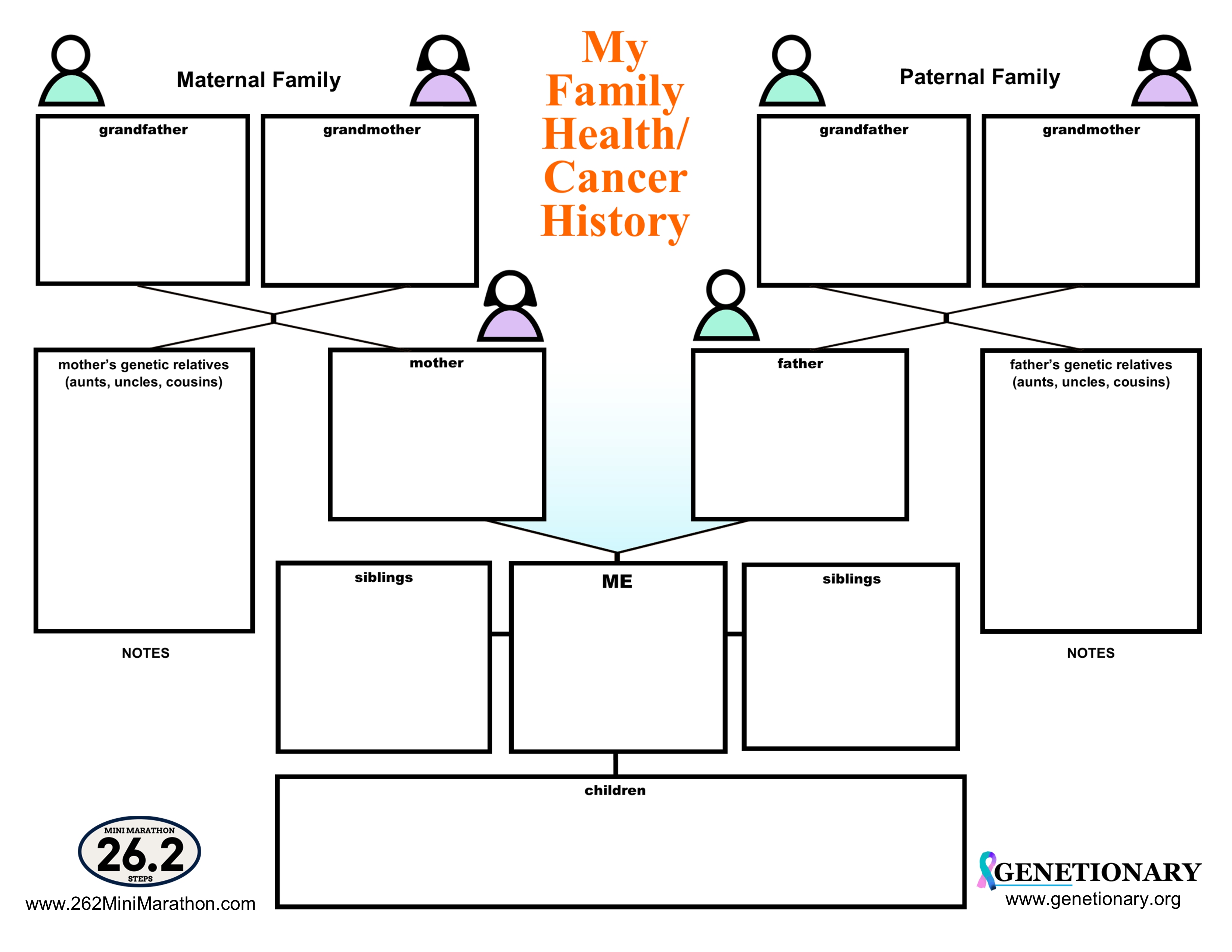
One of the simplest first steps is writing down who in your family has had cancer, and at what age, on both sides. This free fill-in pedigree, created with Genetionary, gives you a place to map it across three generations. Print it, fill it in, and bring it to your doctor or a genetic counselor.
Stories
Board members and community voices share what this experience meant to them. Want to add yours? Share your story.